Development is progressive, with each change building on earlier ones. And development happens in a similar order in most babies, but skills might develop at different ages or times. For example, babies usually learn to sit up, and then they learn to crawl. But this development can happen at any time between 4 and 10 months.
If you’re wondering whether your baby’s development is on track, just remember that development happens over time. Differences among babies are usually nothing to worry about. But you know your baby best. If you feel that something isn’t quite right, it’s important to talk to your child and family health nurse or GP. It’s also OK to get another opinion if you’re still concerned.
What are baby developmental milestones?
Developmental milestones are behavioural or physical signs of a baby’s development. Developmental milestones are a useful guide for tracking your baby’s development.
Developmental milestones are grouped under headings according to the parts of the body they refer to:
Large body movements (gross motor skills) involve the coordination and control of large muscles and include skills like walking, sitting and running.
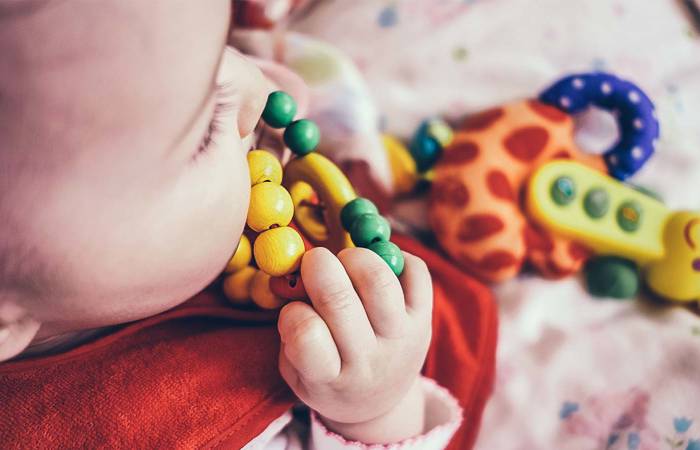
Small body movements (fine motor skills) involve the coordination and control of small muscles and include skills like holding a rattle and picking up crumbs.
Vision is the ability to see near and far and to understand what you see.
Hearing is the ability to hear, listen to and understand sounds.
Speechand language is the ability to make and understand sounds that form words.
Social behaviour and understanding is the ability to learn and interact with others. It includes skills for play, connecting and communicating.