
Category Page

Child Development
Loving relationships and a safe brain
A paper on the Science of Neglect explains that when adult responses are unreliable, inappropriate or absent, a child’s developing brain can be disrupted and subsequent learning and behaviour can be impaired. So how do we ensure a child feels safe?

Child Development
Anxiety: Preparing children for change
As children prepare to go to school or early learning centres the focus is often on meeting new educators and making new friends. So how do parents and carers support children through change? Dr Rebecca English looks at dealing with separation anxiety.

Child Development
Parenting mistakes: How to eat humble pie
Anyone who has raised a child knows parenting perfection is false. Humble pie doesn’t taste great, but it’s very good for our relationships with our little ones. Dr Justin Coulson, one of Australia's most popular parenting experts, suggests 5 steps.

Child Development
Tantrums and meltdowns: How to respond
When your child is raging, crying or screaming during a tantrum, it is possible to feel the need to join in with the explosion of emotions. Dr Becky Kennedy says tantrums offer us the power to demonstrate how to stay calm and manage your own emotions.

Child Development
Dealing with big emotions in under fives
Your toddler is inconsolable one moment and all smiles the next, but it only takes a mix-up over their favourite red cup versus the blue cup to trigger tears or even a full on tantrum. How can parents help children learn to manage big feelings?

Child Development
Biting: What to do when your child bites
So your toddler has bitten another child. Many of us can empathise with how concerning it is to have a child that is biting. The truth is that for many children aged under three, this is a common and often passing phase of normal child development.

Child Development
Is there a right and wrong way to parent?
Research shows parenting style can impact a child’s self-esteem, social skills and ability to self-regulate and cope. The question is: Can the way you raise your children set them up to thrive in the world? Researchers think the answer is yes.

Child Development
How to respond to negative self-talk
Preschoolers may experience anxiety when stepping into unfamiliar environments and this can manifest into negative self-talk. Professor Adam Guastella says this is normal and a common response to facing challenges. So how can parents help?

Child Development
7 tips for those tough parenting days
Some days are tough. Being a parent stretches us. We wish we could hand the children over to grandma (or kindy) and hide under the blanket watching Netflix. Popular parenting expert Dr Justin Coulson looks at ways to handle those difficult parenting days.

Child Development
Childhood milestones: When to seek advice
We've all read the advice on milestones and what your baby or toddler should be doing and when. But what happens if your child isn't meeting their milestone? With conflicting information it can be hard to know when to stop worrying or investigate further.

Child Development
Baby sleep associations and self-soothing
Registered nurse, midwife and author Fran Chavasse says too many people mistakenly believe that children can learn to sleep at any age. In this three-part series, Fran offers her advice on dealing with baby sleep associations and self settling.

Child Development
Children’s growth charts
Children’s physical growth is a sign of their overall health and development. Growth patterns vary among children, and children go through periods of fast and slow growth. But children’s growth usually follows a typical pattern over time.

Child Development
What is colic? Soothing a 'colicky' baby
Colic is not a disease or diagnosis but a combination of baffling behaviors. Newborns experience substantial nervous system development in the first 12 weeks which can result in unsettled behaviour. So what are the theories and what can parents do?
Child Development
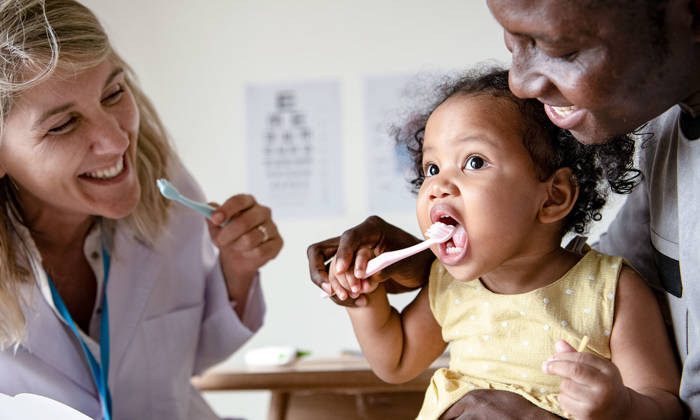
Dental care: Caring for children's teeth
A third of Australian children start school with tooth decay but many families don’t access government funding available to pay for early childhood dental care. Dr Mihiri Silva says it’s essential to set up good dental habits early in a child’s life.

Child Development
How to raise mentally healthy children
It's estimated that around one in seven Australian children experience mental health issues and about half of all serious mental health issues in adulthood begin before age 14. So how can parents and carers support under 5’s as they learn and grow?