Play gives children different sensory, physical, cognitive and social experiences. Experiences build connections in the brain, which helps children develop physically, cognitively, socially and emotionally.
It’s important for children to have many types of play experiences. This includes unstructured and structured play, indoor and outdoor play, solo and group play, craft and creative play, and so on. When children get variety, it’s good for all aspects of their learning and development – physical, social, emotional and imaginative.
Types of play: unstructured and structured
Unstructured, free play
This is unplanned play that just happens, depending on what takes your child’s interest at the time.
Unstructured, free play is important because it lets children use their imagination and move at their own pace. Unstructured play is unpredictable and can involve unexpected challenges, so it can help children develop resilience. And it can be good for infant mental health and child mental health because it helps children to learn to cope with stress.
Examples of unstructured play might be:
creative play alone or with others, including artistic or musical games
imaginative games – for example, making cubbyhouses with boxes or blankets, dressing up or playing make-believe
play in new or favourite spaces like cupboards, backyards, parks, playgrounds and so on.
You can be part of your child’s unstructured play. But sometimes all you’ll need to do is point your child in the right direction – towards the jumble of dress-ups and toys on their floor, or to the table with crayons and paper. At other times, you might need to be a bit more active. For example, ‘How about we play dress-ups? What do you want to be today?’
Structured play
This is organised and happens at a fixed time or in a set space. It’s often guided by a grown-up. Older children are more likely to enjoy and benefit from structured play.
Examples of structured play include:
outdoor ball games like kicking a soccer ball
water familiarisation classes for toddlers or swimming lessons for older children
storytelling groups for toddlers and preschoolers at the local library
dance, music or drama classes for children of all ages
family board or card games
modified sports for slightly older children, like Cricket Blast, Aussie Hoops basketball, NetSetGO netball, Come and Try Rugby and Auskick football.
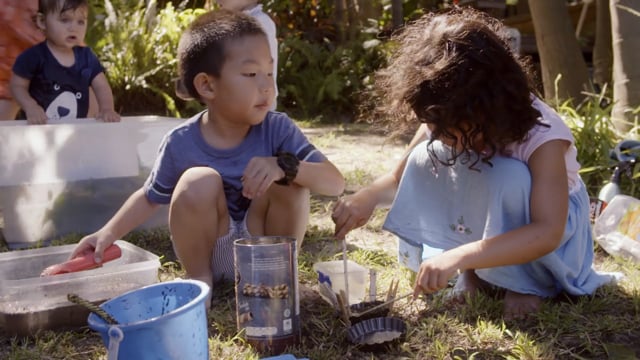
Unstructured and structured play can happen indoors or outdoors. Outdoor play gives your child the chance to explore, be active, test physical limits – and get messy!
How play develops with children
As your child grows, their attention span and physical skills develop and the way they play will change. Your child will get more creative and experiment more with toys, games and ideas. This might mean they need more space and time to play.
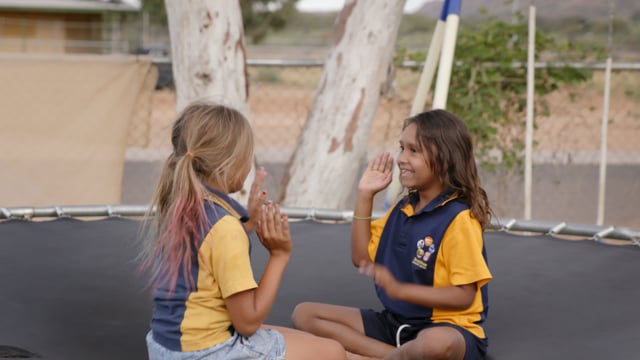
Also, children move through different forms of play as they grow. This includes playing alone, playing alongside other children and playing interactively with other children.
When children have time and space to play without restriction, their imaginations can roam and they can explore ideas. You can try adding simple materials like cardboard boxes to an existing space. This can inspire pretend play, even in small spaces.
Your child will love playing with you, but sometimes they might prefer to play alone. Your child might just want you to give them ideas and let them know how their play and games are going. And sometimes your child might want to play with other children – no grown-ups allowed!
Newborns and babies: play ideas to encourage development
Just looking at your face and hearing your voice is play for your baby, especially if you’re smiling.
You might like to try the following play ideas and activities with your little one:
Music, songs or bells develop hearing and movement. You could try gentle tapping on your baby’s tummy while you sing.
Peekaboo is great for your baby’s social and emotional development.
Gentle tickles or objects with different textures develop the sense of touch. You and your baby could experiment with things like feathers, mud, metal or foam.
Objects of different sizes, colours and shapes can encourage your child to reach and grasp.
Sturdy furniture, balls, toys or boxes can get your child crawling, standing and walking.