Why are games and toys important in childhood? Toys and games can be an important part of children’s play, and play is central to children’s learning and development.
Play that involves toys, games and you is important for your child, especially in early childhood. This can be as simple as:
singing a favourite nursery rhyme together
sorting household objects by colour and shape
having a tea party with your child and their favourite teddy bear.
These kinds of games not only help your child learn, but they also build your relationship.
A variety of games and toys
It’s good to offer your child different sorts of toys and games, because different toys encourage different sorts of play and learning.
For example, jigsaw puzzles and blocks can encourage experimentation, discovery and problem-solving. And dress-ups and teddies can encourage creativity and imagination.
To learn and develop, your newborn needs warm interactions with you, more than toys. For example, they’ll love:
watching your face
listening to your voice
just being with you.
Simple toys
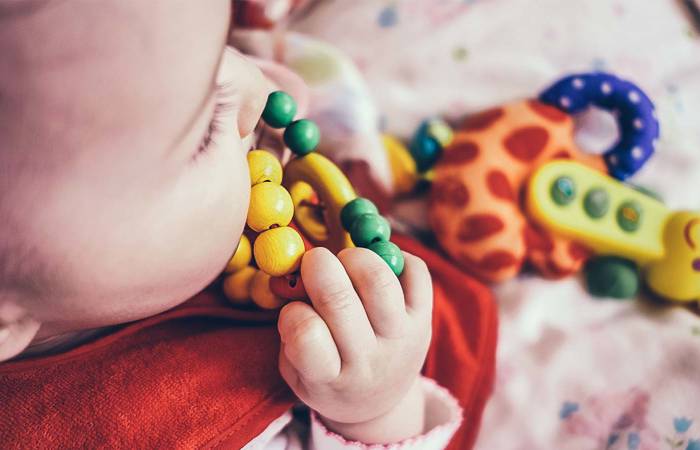
Newborns will enjoy simply looking at a brightly coloured mobile or learning to reach for a rattle.
Sensory toys
Your newborn might enjoy toys or objects with:
contrasting colours like red, black and white
faces or patterns like curves or checks
furry, silky or soft textures, like teddy bears, scarves and cloth books.
Keep in mind that newborns can’t focus on objects more than about 30 cm from their faces, so things might need to be quite close for your baby to see them clearly.
Sound play
Your newborn might enjoy:
soft music or animal sounds
games that involve gentle holding and dancing to a beat
nursery rhymes, especially ones with actions – for example, ‘Round and round the garden’ or ‘Twinkle, twinkle little star’.
If your baby looks tired or overwhelmed when you’re playing together, it’s time to take a break. It’s only play if your baby is enjoying it.
Games and toys for babies and toddlers: 3 months-3 years
A variety of toys
Your child will probably enjoy playing with:
push-along toys, toy cars and ride-on toys
soft balls and cuddly teddies
board or cloth books that can’t be ripped
simple puzzles
blocks for building up and knocking down again!
Cause-and-effect toys
These toys are great because help kids learn that their actions have effects, and they give kids a sense of control in their play.
For example, your child might like a jack-in-the-box or a toy that lets them press a button to play music. The initial surprise might upset some children, so it’s best to introduce these toys gently from around 10 months on.
Sharing books with babies and reading with toddlers is a good way to spend time with your child. They’ll enjoy being held close, looking at bright pictures with you, and hearing your voice.
Household objects
Your pots-and-pans or plastics cupboard can be a great source of entertainment for your child, as can many other ordinary things around your home.
Remember to check for sharp edges, choking risks and other hazards before you give your child household bits and pieces to play with.
Outdoor games
Outdoor play will be a lot of fun for your child. It could be play in:
a sandpit with a bucket and spade
a park with a ball to roll and kick
a paddling pool with plastic cups, jugs and containers for splashing, pouring, tipping and floating.
If your child is playing with toys in a wading pool or the bath, make sure the toys don’t trap water and can be easily washed.
No matter how shallow the bath or pool, safe play around water depends on active supervision. This means being able to see your child and keeping your child within arm’s reach at all times. Never leave your child alone around water.
Toys and games for preschoolers: 3-5 years
Toys for building and making
Children aged 3-5 years often enjoy toys and games that involve building, pulling apart or knocking down, and rebuilding. They often like Lego, Duplo or other blocks.
Experimental games and toys
Your child might like toys or games that encourage experimentation, creativity and problem-solving. For example, your child might enjoy:
making a ramp for rolling objects
piling sticks and rocks to block a stream of water
using playdough to make familiar objects or imaginary creatures.
Pretend play
Your child will probably like anything that they can use for play-acting:
a toy tool box
old ‘grown-up’ items, like an old mobile phone
dress-up clothes
cardboard boxes that they can make into a letter box, car, boat and more.
Musical toys and games
You can make musical instruments with household objects, like:
plastic jars filled with rice or pasta to use as shakers
unbreakable bowls turned upside down to use as drums
rubber bands stretched around a tissue box to make a guitar.
Quiet games and activities
These are good for when your child needs some downtime. Try:
You can keep your child busy and active with outdoor toys like a tricycle, cubbyhouse, sandpit or swings (with an adult nearby). Balls are fun to throw, hit or kick.
Games and toys for school-age children: 5-8 years
Classic toys and games
The classics are sometimes the best. They include:
board games
books
art supplies
construction sets
jigsaw puzzles
outdoor toys like balls, cricket sets, bikes, skipping ropes and so on.
Digital play
Computer games and apps are popular with this age group. That’s fine – it’s all about helping your child achieve a balanced approach to screen time and digital technology use. This means balancing digital technology use with other toys and activities that are good for development, like outdoor play, pretend play, reading and social play.
Play with you
Your child still benefits from spending time playing with you too. It can be fun to just kick a ball around together after school, or to play a card game before bath time.
When choosing the right toys for your family, it helps to consider your child’s age and interests and your family values.